

# HHC Gummies Regulation and Homelessness in Canada
HHC gummies—hexahydrocannabinol-infused edibles—have entered Canada’s cannabis market through a regulatory grey zone, creating disproportionate health and safety risks for people experiencing homelessness. These semi-synthetic cannabinoid products, chemically distinct from THC yet psychoactive, currently operate outside Health Canada’s established cannabis framework, allowing unlicensed sales through gas stations, convenience stores, and online retailers without standardized potency testing, quality controls, or consumer protection safeguards.
This regulatory gap intersects critically with homeless populations, who face compounded vulnerabilities: limited access to healthcare for adverse reactions, heightened exposure to contaminated or mislabeled products sold in survival economies, and existing mental health challenges that unregulated psychoactive substances may exacerbate. While regulated cannabis products undergo mandatory testing for potency, pesticides, and heavy metals, HHC products circulate without verification—a public health concern particularly acute for individuals without stable housing who cannot easily access emergency medical services or navigate product safety recalls.
The issue extends beyond consumer protection to address the underlying causes of homelessness themselves. Substance use disorders, often rooted in trauma and inadequate mental health supports, both contribute to and result from housing instability. When unregulated intoxicants proliferate without corresponding harm reduction infrastructure, they create additional barriers to housing stability, employment, and social services access.
This analysis examines HHC’s legal status in Canada, documents health risks facing homeless communities, identifies current policy failures, and proposes evidence-based regulatory reforms. By bridging cannabis regulation and homelessness policy, we illuminate pathways toward protecting Canada’s most vulnerable populations while addressing broader systemic inequities.
Understanding HHC: Canada’s Latest Regulatory Challenge

The Chemistry and Effects of HHC
Hexahydrocannabinol (HHC) is a semi-synthetic cannabinoid produced through the hydrogenation of tetrahydrocannabinol (THC), a process that adds hydrogen molecules to the compound’s chemical structure. This modification creates a more stable molecule with a longer shelf life compared to traditional THC. HHC occurs naturally in cannabis plants in trace amounts, but commercially available products contain laboratory-synthesized versions to achieve viable concentrations.
Research on HHC’s psychoactive properties remains limited, though users report effects similar to delta-9-THC, including euphoria, altered perception, and relaxation. Preliminary evidence suggests HHC may produce milder psychoactive effects than delta-9-THC, though potency varies significantly across products due to inconsistent manufacturing processes. The compound’s effects on cognitive function, coordination, and judgment raise concerns for vulnerable populations, particularly individuals experiencing homelessness who may face heightened safety risks.
Critical gaps exist in understanding HHC’s pharmacology, including its metabolism, duration of effects, potential for dependence, and interactions with other substances. The absence of standardized dosing information and quality control measures in unregulated markets compounds these uncertainties, creating public health challenges that demand rigorous scientific investigation and evidence-based policy responses.
Current Legal Status in Canada
Hexahydrocannabinol (HHC) currently occupies a regulatory grey area in Canada’s cannabis framework. Unlike THC and CBD, which are explicitly addressed under the Cannabis Act, HHC is not specifically named in federal legislation. This ambiguity creates confusion among manufacturers, retailers, and enforcement authorities regarding its legal status.
Health Canada has not issued definitive guidance classifying HHC as either a controlled substance or a legal cannabinoid product. The substance exists in a similar regulatory vacuum as delta-8-THC and other semi-synthetic cannabinoids derived through chemical processes. While the Cannabis Act regulates naturally occurring cannabinoids and their derivatives, the interpretation of what constitutes a “cannabis product” remains contested when applied to laboratory-modified compounds like HHC.
Provincial and territorial authorities have taken inconsistent approaches to HHC products. Some jurisdictions have seized HHC gummies from retailers, treating them as unauthorized cannabis products, while others have allowed sales to continue pending federal clarification. This patchwork enforcement creates accessibility disparities across Canada and leaves vulnerable populations, including people experiencing homelessness, exposed to products of uncertain quality and safety.
The regulatory uncertainty is further complicated by the lack of mandatory testing standards for HHC products. Without Health Canada oversight, there are no requirements for potency verification, contaminant screening, or accurate labeling. This absence of quality control mechanisms poses particular risks for individuals with limited access to healthcare resources or safe consumption environments, underscoring the urgent need for regulatory clarity and consumer protection measures.
The Regulatory Vacuum: Where HHC Gummies Fall Through the Cracks
Federal vs. Provincial Jurisdiction Issues
Canada’s constitutional division of powers creates significant complications in regulating HHC gummies and protecting vulnerable populations. Health Canada holds federal authority over controlled substances and can add new compounds to scheduled lists, yet faces substantial delays in responding to emerging cannabinoids like HHC. Meanwhile, provinces regulate product sales, distribution, and retail operations within their borders, leading to inconsistent enforcement approaches across jurisdictions.
This regulatory fragmentation proves particularly problematic for homeless populations who frequently cross municipal and provincial boundaries. A product deemed illegal in British Columbia might remain accessible in Alberta, while enforcement priorities vary dramatically between Toronto and Vancouver. Indigenous communities operating under separate governance structures face additional uncertainty regarding jurisdictional authority over these substances.
The enforcement gap widens further when considering limited resources for monitoring emerging products. Federal laboratories require time to develop detection methods for novel compounds, while provincial inspectors lack standardized protocols for identifying HHC products in retail environments. Homeless service providers operating in this regulatory grey zone receive minimal guidance on addressing client use of these unregulated substances, compounding risks for an already marginalized population. Coordinated federal-provincial frameworks remain absent, leaving critical protection gaps unaddressed.

Lack of Testing Standards and Consumer Protection
HHC products currently exist in a regulatory grey zone in Canada, falling outside the established framework of the Cannabis Act that governs THC and CBD products. This creates significant consumer protection gaps, as HHC gummies and similar products face no mandatory testing requirements for potency, contaminants, or heavy metals. Unlike regulated cannabis products sold through provincial systems, HHC items lack standardized labeling that would inform consumers about dosage, potential side effects, or interaction warnings.
For individuals experiencing homelessness, this absence of safety protocols presents heightened risks. Without access to consistent healthcare or the ability to verify product legitimacy, vulnerable populations may unknowingly consume products with inconsistent potency or harmful additives. The lack of regulatory oversight means no quality assurance mechanisms exist to protect consumers from contaminated or mislabeled products.
Research indicates that unregulated substance markets disproportionately impact marginalized communities, yet Canada has not extended its comprehensive cannabis testing and labeling standards to emerging cannabinoids like HHC. This policy gap demands urgent attention from regulators to establish clear testing protocols, implement mandatory labeling requirements, and create enforcement mechanisms that protect all Canadians, particularly those most vulnerable to exploitation in unregulated markets.
Comparison with Established Cannabis Regulations
Canada’s cannabis regulatory framework, established through the *Cannabis Act* (2018), provides comprehensive oversight for THC products including standardized testing protocols, mandatory quality controls, potency limits, child-resistant packaging requirements, and strict labeling standards. Licensed producers must comply with Good Production Practices and undergo regular Health Canada inspections. In stark contrast, HHC exists in a regulatory void—these semi-synthetic cannabinoids fall outside current legislation, leaving consumers without the protections afforded to regulated cannabis products. This gap is particularly concerning for vulnerable populations, including people experiencing homelessness, who may access HHC gummies from unmonitored retail channels. Without mandatory testing, these products may contain unknown contaminants, inconsistent dosing, or misleading potency claims. The absence of age verification requirements and product standards creates public health risks that established cannabis regulations were designed to prevent, highlighting an urgent need for regulatory clarity that extends consumer protections to all psychoactive cannabinoid products in the Canadian market.
Homelessness and Substance Use: Understanding the Intersection
Prevalence of Substance Use in Homeless Populations
Substance use occurs at substantially elevated rates among people experiencing homelessness in Canada compared to housed populations. Research indicates that approximately 30-40% of individuals experiencing homelessness report problematic substance use, with rates varying significantly across different populations and geographic regions. A 2019 national study found that cannabis was the most commonly used substance, followed by alcohol and opioids, though polysubstance use remains prevalent.
The relationship between substance use and homelessness is complex and bidirectional. While substance use can contribute to housing loss, the trauma and stress of homelessness often precipitate or exacerbate substance use as a coping mechanism. Importantly, the unregulated nature of many substances available to homeless populations increases health risks substantially. This context makes understanding the implications of emerging products like HHC gummies particularly critical, as regulatory gaps may disproportionately impact this vulnerable population. Recent investigations into cannabinoid products and homeless health underscore the need for evidence-based approaches that address both harm reduction and regulatory oversight while respecting the autonomy and dignity of people experiencing homelessness.
Why Vulnerable Populations Turn to Unregulated Products
Individuals experiencing homelessness face disproportionate barriers that make unregulated HHC products particularly appealing, despite significant health risks. Economic constraints represent the primary driver—unregulated products often retail at substantially lower prices than regulated cannabis alternatives, making them accessible to populations with severely limited financial resources. Research indicates that people experiencing homelessness allocate approximately 44% of their income to shelter and food, leaving minimal discretionary funds for health-supporting purchases.
Accessibility further compounds this vulnerability. Unregulated vendors frequently operate in neighborhoods with higher concentrations of marginalized populations, while regulated dispensaries cluster in commercial districts that homeless individuals may avoid due to perceived or actual exclusion. Many unregulated products require no identification verification, eliminating barriers for those without current government-issued ID—a common situation among people experiencing homelessness.
Marketing strategies explicitly target cost-conscious consumers through claims of equivalent effects at reduced prices, without transparent ingredient disclosure or safety warnings. The visual similarity between regulated and unregulated products creates confusion, particularly among populations with limited access to digital information sources for verification.
Knowledge gaps about HHC’s synthetic nature and associated risks persist across vulnerable populations. Without stable housing, individuals lack consistent access to healthcare providers who might offer guidance, while information campaigns about emerging substances rarely reach those experiencing homelessness. This combination of economic pressure, physical accessibility, deceptive marketing, and information asymmetry creates conditions where vulnerable populations unknowingly assume substantial health risks when selecting unregulated products.
Specific Risks HHC Gummies Pose to People Experiencing Homelessness
Health Risks Without Medical Oversight
The absence of regulatory oversight for HHC gummies creates significant health risks for people experiencing homelessness, who already face substantial barriers to healthcare access. Without standardized product testing, users may be exposed to inconsistent THC-analogue concentrations, potentially triggering adverse reactions including anxiety, paranoia, or cardiovascular complications. Research on HHC’s long-term effects remains limited, leaving vulnerable populations particularly exposed to unknown health consequences.
Homeless individuals often lack access to emergency medical intervention when adverse reactions occur. Unlike housed populations who can seek immediate care, those experiencing homelessness may delay treatment due to transportation barriers, previous negative healthcare experiences, or fear of judgment. Additionally, pre-existing health conditions—common among homeless populations—can interact unpredictably with unregulated cannabinoids. The lack of product labeling and dosage information further compounds risks, as users cannot make informed decisions about consumption. This situation demands urgent policy attention to ensure harm reduction strategies reach those most vulnerable to unregulated cannabis products.
Economic Exploitation and Predatory Marketing
The absence of regulatory oversight for HHC products creates conditions where unscrupulous vendors may exploit vulnerable populations, including individuals experiencing homelessness. Without price controls or quality standards, unregulated markets often feature inflated pricing structures that disproportionately burden those with severely limited financial resources. Research from international markets demonstrates that emerging cannabinoid products frequently carry premium price points despite minimal production costs, resulting in significant profit margins for retailers while straining the budgets of low-income consumers.
Predatory marketing practices may specifically target populations seeking affordable alternatives to regulated cannabis products or conventional medical treatments. Vendors operating outside regulatory frameworks face no accountability for misleading health claims or deceptive advertising regarding therapeutic benefits. For individuals experiencing homelessness who may be managing chronic pain, mental health conditions, or substance use challenges, unverified promises of relief can lead to substantial financial expenditure on ineffective or potentially harmful products.
The financial burden extends beyond initial purchase costs. Without quality assurance mechanisms, consumers face increased risks of adverse reactions requiring medical intervention, creating additional economic strain through healthcare expenses. This economic exploitation perpetuates cycles of vulnerability, diverting scarce resources from essential needs such as food, shelter, and evidence-based healthcare services.
Barriers to Accessing Services and Housing
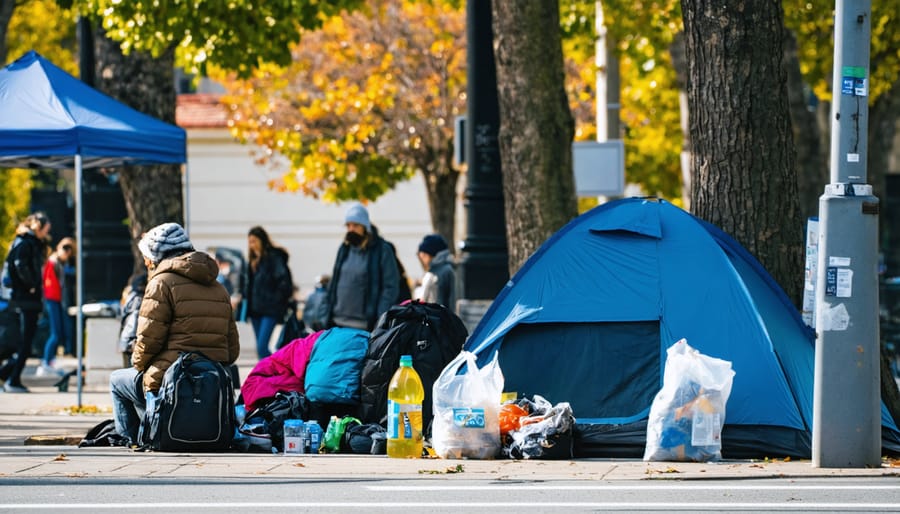
Substance use, including consumption of legally ambiguous products like HHC gummies, creates significant barriers for individuals experiencing homelessness seeking emergency shelter and housing services. Many emergency shelters maintain strict substance-free policies that exclude individuals using any intoxicating substances, regardless of legal status. The regulatory grey zone surrounding HHC products complicates enforcement of these policies, as staff may lack clear guidance on how to address semi-synthetic cannabinoids that exist outside traditional cannabis frameworks.
Treatment programs often require complete abstinence from all psychoactive substances, yet the unregulated nature of HHC makes monitoring compliance challenging. Unlike regulated cannabis products tracked through provincial systems, HHC purchases leave no verifiable trail, undermining accountability measures that some programs have adapted for legal cannabis use.
Housing-first initiatives, while generally more accommodating of substance use, still face complications when residents consume products of unknown potency and composition. Unpredictable effects from unregulated HHC products can trigger safety concerns, potentially jeopardizing housing stability. Additionally, the legal ambiguity creates administrative uncertainty for housing providers regarding liability and duty-of-care obligations. These compounding barriers disproportionately affect vulnerable populations, necessitating policy clarification and service adaptations that acknowledge both harm reduction principles and the complex regulatory landscape surrounding emerging cannabinoid products.
Policy Gaps and the Need for Integrated Responses
Disconnect Between Cannabis Policy and Social Services
Canada’s approach to HHC gummies reveals a critical coordination gap between cannabis regulatory bodies and social service agencies supporting people experiencing homelessness. Health Canada’s focus remains primarily on product safety and market control, while provincial and municipal homelessness services address immediate survival needs—rarely do these systems communicate effectively about emerging substance-related risks.
This siloed approach means that when unregulated products like HHC gummies enter the market, harm reduction workers, shelter staff, and outreach teams often lack timely information about their composition, potency, or health effects. Regulatory agencies may issue warnings through official channels that never reach frontline service providers or the individuals most vulnerable to these products. Similarly, observations from homelessness services about adverse reactions or consumption patterns rarely inform regulatory decision-making.
Research from international jurisdictions demonstrates that coordinated responses—where regulatory agencies actively partner with social services to share information, develop targeted education materials, and monitor impacts on vulnerable populations—significantly improve health outcomes. Canada’s fragmented approach represents a missed opportunity to protect people experiencing homelessness while gathering essential data about how novel cannabis products affect this population, ultimately weakening both regulatory effectiveness and harm reduction efforts.
Harm Reduction Approaches Being Overlooked
Canada’s harm reduction framework has successfully addressed opioid overdoses, tobacco use, and alcohol consumption through evidence-based interventions that prioritize health over criminalization. However, these established principles are conspicuously absent from discussions surrounding emerging cannabinoids like HHC. While supervised consumption sites, drug checking services, and peer support programs exist for traditional substances, no parallel infrastructure addresses the risks posed by unregulated hemp-derived products.
This oversight is particularly concerning for people experiencing homelessness, who face disproportionate exposure to unregulated markets due to accessibility and cost factors. Research from international jurisdictions demonstrates that harm reduction strategies—including accurate product information, contamination testing, and low-barrier access to safer alternatives—significantly reduce adverse health outcomes. Yet Canadian policymakers have not extended these proven approaches to the rapidly evolving cannabinoid landscape.
The inconsistency reveals a critical gap in public health policy. Establishing testing services for cannabinoid products, providing education about emerging substances through existing outreach programs, and ensuring regulatory frameworks protect vulnerable populations would align with Canada’s stated commitment to evidence-based harm reduction while addressing immediate risks faced by homeless individuals accessing these products.
International Perspectives and Lessons Learned
International regulatory approaches to novel cannabinoids like HHC reveal both cautionary tales and promising frameworks that could inform Canadian policy. The European Union has adopted a precautionary principle, with several member states classifying HHC as a controlled substance pending comprehensive safety data. Germany and Austria moved swiftly to ban HHC products in 2023 after market surveillance detected widespread availability without toxicological assessment, particularly in convenience stores frequented by marginalized communities.
The United Kingdom’s approach offers valuable insights through its novel psychoactive substances framework, which creates presumptive controls on synthetic cannabinoids while allowing for evidence-based exemptions. This regulatory model has been paired with harm reduction initiatives specifically targeting vulnerable populations, including dedicated outreach programs that provide education about unregulated substances to people experiencing homelessness. Early evaluations suggest this integrated approach reduces both emergency department visits and engagement with contaminated products.
Australia’s experience demonstrates the importance of coordinating cannabinoid regulation with social services. Following concerns about synthetic cannabinoid use among homeless populations, Australian jurisdictions implemented concurrent strategies: rapid regulatory responses to novel compounds and expanded harm reduction services in areas with high rates of homelessness. Their multi-sector working groups, which include public health officials, addiction specialists, and homeless service providers, ensure regulatory decisions consider impacts on vulnerable communities.
These international examples underscore three critical lessons for Canada: the necessity of adaptive regulatory frameworks that can respond quickly to emerging cannabinoids, the importance of integrating harm reduction services with enforcement approaches, and the value of including voices from communities experiencing homelessness in policy development. Evidence suggests that regulatory effectiveness increases substantially when paired with accessible, non-punitive support services that address the underlying vulnerabilities driving substance use among marginalized populations.
Recommendations for Researchers, Advocates, and Policy Makers
Research Priorities
Several critical research gaps require immediate attention to inform evidence-based policy responses. First, prevalence studies must establish baseline data on HHC gummy consumption among people experiencing homelessness across Canadian cities, examining purchasing patterns, access points, and reasons for use. Second, comprehensive health impact assessments should investigate both acute and long-term effects of unregulated HHC products on vulnerable populations, including interactions with existing health conditions, mental health implications, and potential contamination risks from unregulated manufacturing.
Third, researchers need to evaluate the effectiveness of harm reduction interventions specifically tailored to emerging cannabinoids within homeless service settings. This includes assessing peer education programs, safe supply alternatives, and integrated treatment approaches. Additionally, comparative policy analysis examining regulatory frameworks in other jurisdictions could identify best practices for protecting marginalized populations while addressing market realities.
Finally, interdisciplinary research exploring the intersection of housing instability, substance use, and regulatory gaps is essential. Studies should include participatory research methods that center the lived experiences of people experiencing homelessness, ensuring that findings translate into compassionate, evidence-informed policies rather than punitive measures that further marginalize already vulnerable individuals.
Policy and Regulatory Reforms
Canada requires immediate regulatory action to address the legal ambiguity surrounding hexahydrocannabinol (HHC) products. Health Canada should explicitly classify HHC and similar semi-synthetic cannabinoids under the Cannabis Act, closing loopholes that currently allow these substances to circumvent established safety standards. This classification must include mandatory product testing for potency and contaminants, clear labeling requirements that specify cannabinoid content and potential risks, and restrictions on marketing practices that target vulnerable populations.
Consumer protection measures should mandate child-resistant packaging, dose limitations per package, and warnings about psychoactive effects. Provincial jurisdictions need harmonized enforcement mechanisms to prevent regulatory arbitrage, where manufacturers exploit jurisdictional inconsistencies. Penalties for non-compliance must be sufficiently robust to deter illegal market activity.
Critically, regulatory reforms should incorporate equity considerations by ensuring that people experiencing homelessness have access to evidence-based cannabis education and harm reduction services. This includes funding community health programs that provide unbiased information about regulated versus unregulated products. Policy makers should establish cross-sectoral collaboration between health authorities, housing advocates, and Indigenous organizations to develop culturally appropriate interventions. These reforms represent essential steps toward protecting public health while addressing the disproportionate impact of unregulated cannabis products on marginalized communities.
Community-Level Interventions
Frontline workers require evidence-based protocols to address HHC gummy use among homeless clients. Community-level interventions should include harm reduction education, specifically identifying unregulated products and their health risks. Shelters can implement non-punitive substance use policies that encourage disclosure, enabling staff to provide appropriate medical support during adverse reactions. Mobile health units should carry rapid toxicology screening capabilities to differentiate HHC from other substances, ensuring accurate emergency response. Healthcare providers serving homeless populations need training on synthetic cannabinoid presentations and treatment protocols. Establishing partnerships between addiction services, mental health teams, and homeless outreach workers creates integrated care pathways. Distribution of educational materials in accessible formats—including visual guides identifying legitimate versus unregulated products—empowers clients to make informed choices. These practical strategies acknowledge substance use realities while prioritizing client safety and dignity.

The emergence of hexahydrocannabinol (HHC) gummies in Canada’s evolving cannabis landscape presents critical regulatory challenges that disproportionately affect people experiencing homelessness. This analysis has demonstrated that when regulatory frameworks lag behind market innovation, vulnerable populations invariably bear the heaviest consequences. The intersection of inadequate HHC regulation and homelessness reveals systemic failures that demand immediate, coordinated action.
People experiencing homelessness face heightened exposure to unregulated products due to limited access to verified information, increased reliance on informal markets, and barriers to healthcare that could address potential harms. Current regulatory gaps create dangerous vacuums where product safety, potency verification, and consumer protection remain absent precisely where they are needed most. The evidence presented throughout this research indicates that without swift regulatory intervention, HHC products will continue to pose unpredictable health risks to communities already navigating profound systemic inequities.
Addressing this challenge requires integrated policy responses that simultaneously strengthen cannabis product regulation while acknowledging the specific vulnerabilities of unhoused populations. Regulatory agencies must prioritize comprehensive testing requirements, clear labeling standards, and enforcement mechanisms for HHC products. Equally important, policymakers must ensure that harm reduction services, accessible healthcare, and housing-first initiatives receive adequate resources to support those most affected by regulatory failures.
The urgency cannot be overstated: every day without appropriate regulation represents another day that Canada’s most vulnerable residents face unnecessary health risks. Researchers, advocates, and policymakers must collaborate to implement evidence-based frameworks that protect human dignity while recognizing the complex realities of substance use and homelessness. Compassionate, integrated responses are not merely aspirational—they are essential to fulfilling Canada’s obligation to safeguard all residents, particularly those experiencing homelessness.